
A Capital Built on Layers of Time
Mexico City does not sit quietly on the landscape. Mexico City is a capital that erupts, breathes and hums at an altitude few travelers expect from a metropolis this size. It is a city stacked on top of itself — an Aztec lake bed beneath colonial stone beneath modern steel and glass. For adventurous female travelers, Mexico City is rarely anyone’s first guess for Latin American adventure, and that is exactly its advantage. There is no need to search for authenticity here. Authenticity is unavoidable. It spills out of every market stall, every mural, every plate of food handed to you by someone who learned the recipe from a grandmother rather than a menu.
You arrive expecting chaos. You leave understanding rhythm.
Neighborhoods That Carry Distinct Souls
Roma and Condesa breathe Art Deco elegance — tree-lined streets, independent bookstores, brunch spots tucked behind unmarked doors, and a slower pace that rewards aimless wandering. Coyoacán feels like a village folded inside a megacity, cobblestone streets radiating out from a plaza where marimba music competes with the smell of roasting corn. This is Frida Kahlo’s neighborhood, and her Casa Azul still holds the cobalt-blue intensity of her interior world. The Centro Histórico is a different register entirely — grand, layered, overwhelming, where the Zócalo opens into a plaza so large it swallows the noise of the city around it.
Mexico City does not offer one identity. It offers a dozen, stitched loosely together by avenues that never quite go in a straight line.
The Ancient City Beneath the Modern One
Step behind the cathedral in the Centro Histórico and you find Templo Mayor, the excavated heart of the Aztec capital Tenochtitlan, sitting in stone silence beside colonial facades built directly on top of it. This is not history behind glass. This is history you can stand inside, feeling the strange vertigo of a city built quite literally on the memory of the empire it replaced.
A short trip beyond the city brings you to Teotihuacan, where the Pyramid of the Sun and the Pyramid of the Moon rise from the valley floor with a scale that photographs never quite prepare you for. Climbing them changes your sense of what ancient ambition looked like.
Xochimilco and the Water That Remembers
Before Mexico City was concrete, it was water. Xochimilco is what remains of the canal system the Aztecs once used to move across their lake-bound capital, and gliding along it on a brightly painted trajinera feels like drifting through the city’s oldest memory. Vendors paddle past selling flowers and grilled corn. Mariachi bands float by on their own boats, playing for whoever waves them over.
It is chaotic, colorful and unmistakably alive. For female travelers, it is also one of the most communal experiences the city offers — strangers on neighboring boats end up singing the same songs by the second hour.
Markets, Mezcal and the Art of Slow Devotion
Mexican cuisine is not a genre. It is a philosophy of patience. Mole takes days to build, layering chiles, chocolate and spice into something that tastes like an entire region’s history in a single spoonful. Street tacos al pastor, sliced straight from a spinning trompo, are a study in precision disguised as simplicity. Mezcal, smoky and unhurried, is sipped rather than shot, often in small bars where the bartender knows exactly which region your glass came from.
Markets like La Merced overwhelm every sense at once — chile powder in the air, fresh flowers stacked in towers, fruit you may not recognize by name but will remember by taste.
Murals, Memory and the Ghosts of Kahlo and Rivera
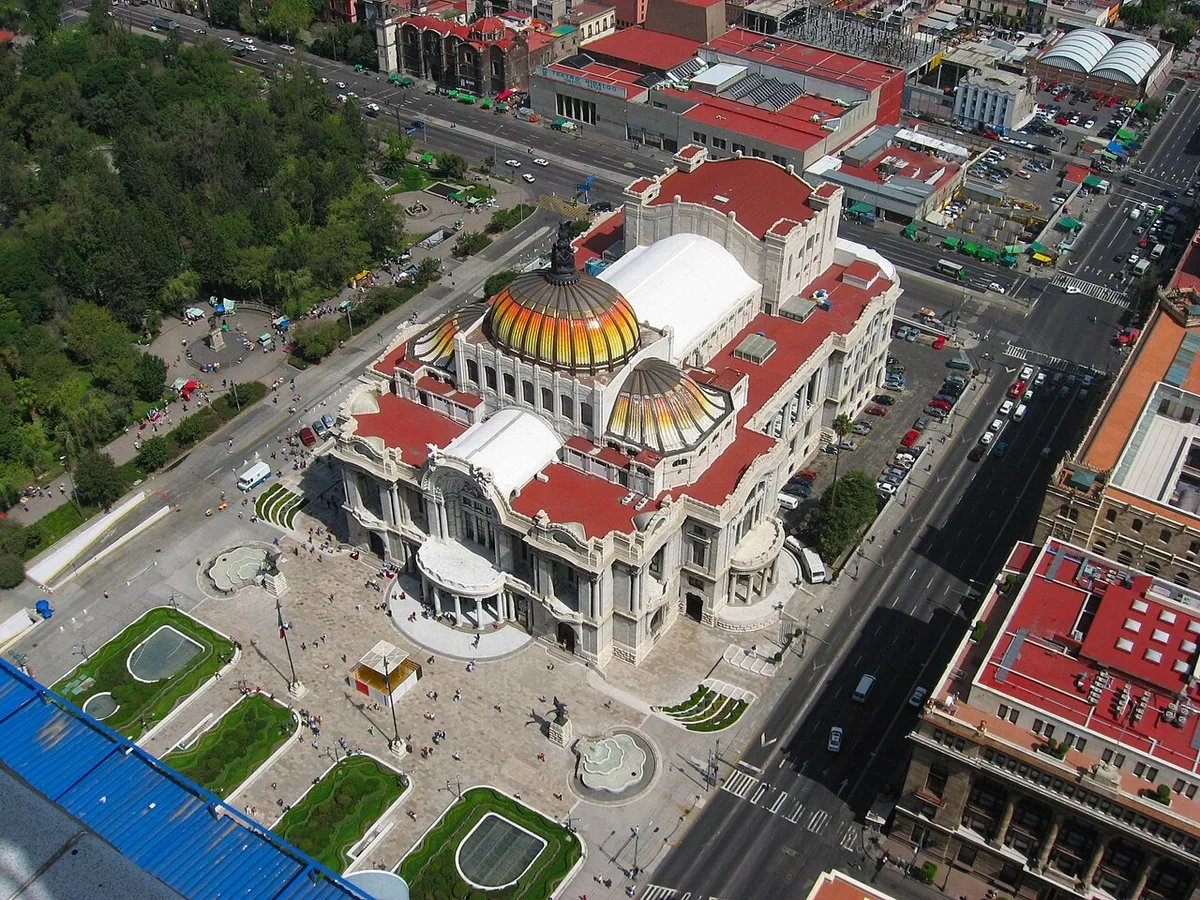
Mexico City turned its walls into its history books. Diego Rivera’s murals inside the Palacio Nacional narrate centuries of struggle and identity across surfaces so large they require slow, patient viewing. Frida Kahlo’s presence lingers everywhere, not as tourist branding but as a genuine current running through the city’s creative identity. Bellas Artes stands as a monument to that fusion of European form and Mexican color.
For adventurous women drawn to art with teeth, this is a city where beauty and politics were never separated — where every mural was also an argument.
Altitude and the Volcanoes That Watch the City
Mexico City sits over two thousand meters above sea level, and your body notices before your mind does. The air feels thinner, the sun feels closer, and the light in late afternoon turns a particular shade of gold that photographers chase for years elsewhere. On clear days, the twin volcanoes Popocatépetl and Iztaccíhuatl rise on the horizon, snow-capped reminders that this basin was carved by forces far larger than the city itself.
Chapultepec Park, one of the largest urban parks in the Western Hemisphere, gives you room to breathe within all that altitude, its castle looking out over rooftops that stretch toward the mountains.
Female Solo Travel Reality
Mexico City is enormous, and like any megacity it rewards street sense over bravado. Neighborhoods like Roma, Condesa and Coyoacán are comfortable for solo exploration well into the evening. Other areas require the same situational awareness any capital city demands.
What surprises many female travelers is the warmth underneath the city’s intensity — vendors who slow down to explain a dish, strangers who redirect you kindly when you take a wrong turn, a culture where hospitality is instinctive rather than performed. Adventure here is not reckless. It is attentive.
Why Mexico City Stays With You
You leave Mexico City with your senses recalibrated. The taste of a mole you cannot quite describe to anyone back home. The sound of mariachi drifting across canal water. The particular gold of altitude light on a volcano at dusk.
Mexico City does not offer a single postcard image because it refuses to be reduced to one. It offers accumulation — layer stacked on layer, century stacked on century, flavor stacked on flavor — until you realize the city has rearranged your definition of what a capital city can hold.
The Wench’s Verdict
• Scenery & Vibe: 8.5/10
• Local Friendliness: 8.5/10
• Adventure Factor: 8.5/10
The Final Word: Mexico City rewards travelers willing to trade postcard expectations for texture. It’s not a city that hands you its beauty easily — it’s stacked, sprawling and occasionally overwhelming, but underneath the noise sits an astonishing depth of art, history and flavor. For that layered, unpolished richness, the scenery and vibe earn 8.5/10.
Chilangos, as locals call themselves, carry a reputation for being reserved with strangers, but that reserve dissolves quickly once you show genuine curiosity about their city. Ask a vendor about their dish or a bookseller about their neighborhood, and you’ll find real warmth underneath the initial formality — an easy 8.5/10. The adventure here is cultural and sensory rather than physical: canals, ruins, murals and markets stacked into every single day, another solid 8.5/10.
My biggest tip? Skip the taxi and take the metro at least once — it is one of the most heavily used systems in the world and gives you an unfiltered view of daily life in the capital. Then head to Coyoacán on a weekend morning, when the plaza fills with families, musicians and food stalls, and you’ll understand why locals never tire of their own city.
* Disclaimer: This review is based on our personal experience. Read our full disclaimer here.