
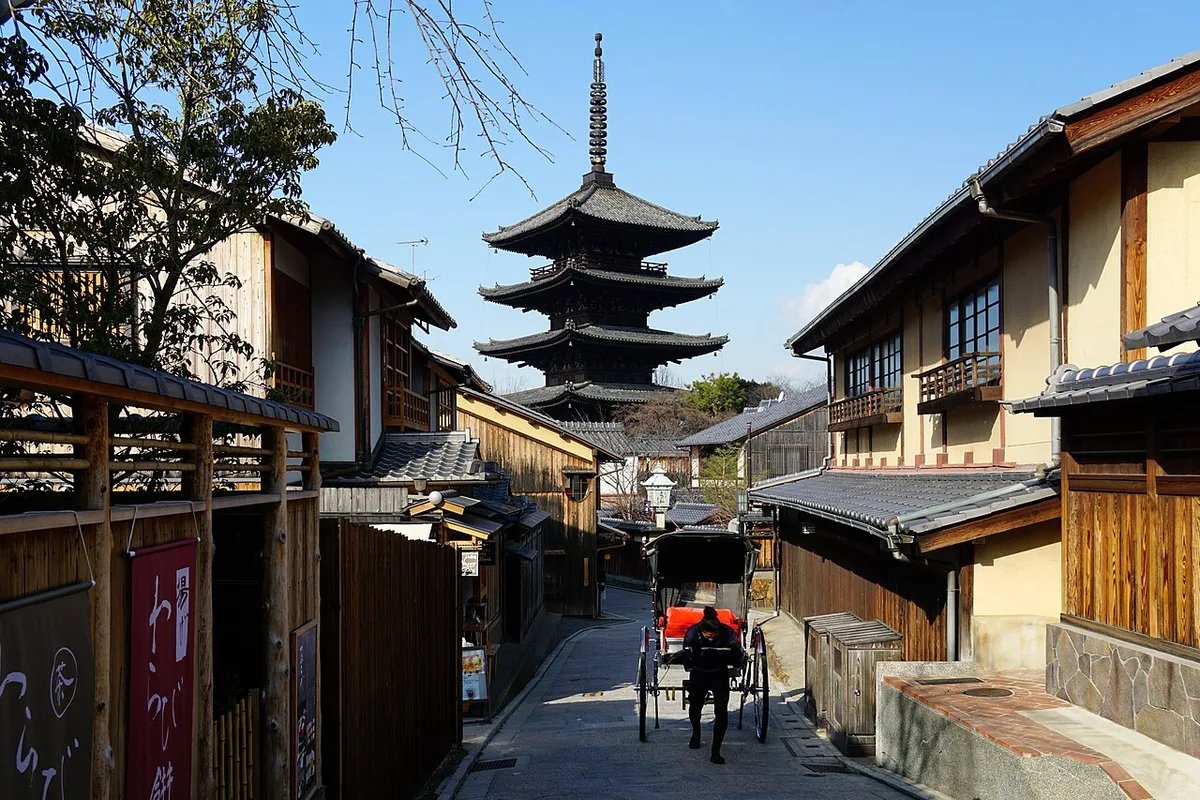
The City That Teaches You to Slow Down
Kyoto does not announce itself. It waits. While Tokyo dazzles and Osaka roars, Kyoto simply exists — folded into hills, wrapped in cedar smoke, humming with a thousand years of ritual that never quite ended. The moment you step off the train, the noise falls away, replaced by narrow lanes, wooden facades, and the soft clack of geta on stone.
For adventurous women drawn to depth rather than noise, Kyoto offers a different kind of thrill — the adventure of attention. It is the fold of a paper lantern, the sound of water sliding over a temple gate, the particular gold of afternoon light on a five-story pagoda. Kyoto rewards patience and punishes rushing. Once you surrender to its rhythm, something in you slows down too, and stays that way long after you leave.
Arrival, and the Weight of a Thousand Years
You feel Kyoto before you understand it. The air smells of incense and river water. Bicycles hum past on quiet streets. Somewhere a temple bell marks an hour that seems to matter less here than anywhere else. Unlike cities built for speed, Kyoto was built for return — for pilgrims, poets, and travelers who came back again and again to the same shrine, the same garden, the same bend in the river.
That sense of return follows you immediately. You are not passing through Kyoto so much as being folded into it. The past is not a museum piece here; it is a living layer beneath the present, visible in every tiled roof and every stone step worn smooth by centuries of footsteps.
Wandering the Old Streets of Higashiyama and Gion
Adventure in Kyoto often means nothing more dramatic than getting lost on purpose. In Higashiyama, cobbled lanes climb past teahouses and pottery shops toward the hillside temples, and every turn reveals a new composition — a lantern, a maple branch, a courtyard glimpsed through a half-open gate. In Gion, wooden machiya townhouses line streets that seem untouched by the modern century, and if you linger near dusk you might catch the quick, silent passage of a geiko or maiko slipping between appointments, a flash of silk and white paint against the dark wood.
This is Kyoto’s quiet urban adventure: no map required, just curiosity and a willingness to follow whichever alley looks most interesting. You will not run out of alleys, and you will not run out of reasons to stop.
Ten Thousand Gates and the Climb Into Orange Light
Some adventures in Kyoto are physical, and none more striking than the walk up Mount Inari through thousands of vermilion torii gates. The path winds through forest, past small stone fox statues and hidden shrines, the gates pressing so close together that sunlight breaks through in flickers rather than beams. Climbing higher, the city noise disappears entirely, replaced by birdsong and your own breathing.
Few hikes in the world compress spectacle and solitude the way this one does. You can turn back after the first crowded stretch, or keep climbing until the crowds thin and the forest feels entirely your own. Either way, the gates keep unfolding ahead of you, a corridor of orange leading nowhere and everywhere at once.
The Green Silence of Bamboo and Moss
West of the city center, the Arashiyama bamboo grove rises in narrow green columns that sway and creak overhead, filtering light into a soft, shifting glow. It feels less like a forest and more like a cathedral built from living wood. Nearby, moss-covered temple gardens spread in careful, deliberate stillness — raked gravel, still ponds, a single maple positioned as though the whole garden were composed around it.
These spaces are Kyoto’s answer to wilderness: not vast or untamed, but distilled, intentional, and quietly overwhelming. For travelers used to adventure meaning motion, Kyoto’s gardens teach a different lesson — that stillness, held long enough, can feel just as expansive as any mountain view.
Following the Water Along the Philosopher’s Path
A narrow canal lined with cherry trees runs beneath the eastern hills, connecting a string of temples along what is known as the Philosopher’s Path. Walking it in either direction feels less like sightseeing and more like moving meditation — the water beside you, small shrines tucked into side lanes, cats dozing on sun-warmed steps.
In spring, the canopy overhead turns pale pink and petals drift onto the surface of the water like the city is exhaling. In autumn, the same path burns red and gold. Whatever the season, the walk offers the same quiet reward: a sense that Kyoto has arranged itself, deliberately, for people willing to walk slowly and look closely.
The Taste of Kyoto
Food here is its own form of craftsmanship. In the covered stalls of Nishiki Market, vendors sell pickled vegetables in colors you didn’t know vegetables could be, skewers of grilled fish, and delicate wagashi sweets shaped like seasonal flowers. Sit down for a proper kaiseki meal and you’ll watch a parade of small, precise courses arrive — each one a tiny composition of season, texture, and color, built around the idea that a meal should mirror the natural world outside.
Tofu, too, is treated with unexpected reverence in Kyoto, served silken and simple, letting its subtlety speak for itself. And everywhere, matcha — whisked into tea, folded into sweets, poured over ice — offers a bitter green thread running through the whole city’s cuisine.
Craft, Ritual, and the Art of Attention
Kyoto has always been a city of makers — potters, weavers, papermakers, tea masters — and that lineage is still visible in its quiet backstreet workshops. Sit through a traditional tea ceremony and you begin to understand Kyoto’s deeper philosophy: that precision and beauty are inseparable, that every gesture, no matter how small, deserves full attention.
Rent a kimono for an afternoon and walk through Higashiyama in it, and the city responds differently to you — slower, more textured, more present. It’s a small ritual, but like so much in Kyoto, its meaning grows the longer you sit with it. Adventure, in this city, often looks like devotion disguised as leisure.
Kyoto After Dark
When the sun drops behind the eastern hills, Kyoto softens rather than switches on. Stone lanterns flicker along canal-side paths in Gion. Izakaya doors slide open to release warm light and the smell of grilled skewers into narrow streets. Conversation hums low in small bars tucked behind unmarked doors, the kind you’d never find without a local pointing the way.
There is no roaring nightlife here, no neon sprawl. Instead, Kyoto’s nights carry the same restraint as its days — intimate, unhurried, and faintly theatrical, like the city itself is holding a lantern up to a memory it doesn’t want to let go of. It is one of the gentlest, most atmospheric nights you’ll find anywhere in Asia.
The Wench’s Verdict
• Scenery & Vibe: 10/10
• Local Friendliness: 8/10
• Adventure Factor: 7.5/10
The Final Word: Kyoto is proof that a city can be an adventure without a single ounce of chaos. The scenery earns a full 10/10 without hesitation — between the bamboo groves of Arashiyama, the endless orange gates of Fushimi Inari, and the maple-lined canals of the Philosopher’s Path, it is one of the most visually composed cities on earth. Every corner feels arranged, and yet none of it feels staged.
The people are polite, precise, and quietly warm, though the courtesy can occasionally feel formal until you find the small openings — a shopkeeper’s genuine smile, a tea master’s patient instruction. For that measured, respectful kindness, Kyoto earns a strong 8/10 on friendliness.
The adventure factor here is unconventional. There are no adrenaline rushes, no wild landscapes to conquer — instead, the thrill comes from climbing a thousand gates before sunrise, getting deliberately lost in Higashiyama, or sitting through a tea ceremony that asks more focus of you than any hike. For that quieter, more internal kind of adventure, I’ll give it a solid 7.5/10.
My biggest tip? Go to Fushimi Inari before dawn. The gates are the same, but the silence is not — and you’ll have the whole orange corridor almost entirely to yourself.
* Disclaimer: This review is based on our personal experience. Read our full disclaimer here.